Suicidal Empathy: How Pathological Altruism Became the Most Powerful Political Weapon of Our Time
Updated: Mar 18

In 2011, researcher Barbara Oakley edited a volume called Pathological Altruism - one of the first serious academic attempts to examine what happens when the human impulse toward empathy and helping becomes destructive. The concept is straightforward: altruism becomes pathological when it causes harm to the giver, to third parties, or even to the intended recipient, and when the person practicing it either cannot perceive the harm or cannot stop despite perceiving it.
The book was largely ignored by mainstream political discourse. That's not surprising. Because if you follow the concept of pathological altruism out of the psychology literature and into the actual machinery of modern politics, you end up somewhere that's very uncomfortable for a lot of people on both sides of the aisle: the conclusion that empathy, in its current cultural form, has been deliberately engineered as a mechanism of elite control and that the working and middle class across every demographic is the one paying the price for it.
What Pathological Altruism Actually Is
Normal altruism is a social good. People help each other, communities form, cooperation produces outcomes that benefit everyone. The pathological version is different. It's characterized by several specific features: the costs are borne by the giver (or uninvolved third parties) rather than by those advocating for the helping. The helping is performed publicly and socially, in a way that generates status for the helper.
Criticism of the helping even on practical grounds is treated as moral failure. And the actual outcomes for the intended recipient are either ignored or treated as secondary to the emotional experience of helping.
Sound familiar? It should. Because that description maps almost perfectly onto the dominant mode of elite political culture in America over the past two decades. The Iraq War was sold partly on humanitarian grounds: liberating an oppressed population. The financial crisis bailouts were framed as systemic necessity, we had to help the banks to save the economy. Mass immigration advocacy is almost entirely conducted in the language of compassion, these are people fleeing suffering, and opposing their arrival is cruelty.
In each case: the emotional framing is empathy-based, the costs are borne by ordinary people rather than by the advocates, and criticism of the policy is treated as a character defect rather than a legitimate position.
The Iraq War Was a Humanitarian Intervention (That Killed 200,000 People)
This is the clearest historical example and it's worth spending a moment on it. The initial WMD justification for the Iraq War fell apart quickly. What kept the war politically sustainable for years was a secondary moral argument: Saddam Hussein was a monster who gassed his own people, the Iraqi population deserved freedom and "democracy." America had both the power and the obligation to deliver it.
This is a textbook empathy-based political argument. It's also the argument that produced 200,000 Iraqi civilian deaths, 4,500 American military deaths, a trillion-dollar price tag, and a regional power vacuum that created ISIS.
The people who made this argument, the think tank analysts, the television pundits, the political consultants, did not send their children to Fallujah. The costs of their empathy were paid by working-class American families and Iraqi civilians who didn't ask to be liberated. The advocates got status. The beneficiaries got a failed state. The cost-bearers got flag-draped coffins and then got called unpatriotic when they noticed the discrepancy.
Why Elites Love Mass Empathy and Pay None of Its Costs
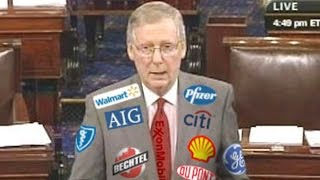
Here is the structural fact that ties this together and that almost nobody in mainstream political media will say plainly: the people who most loudly advocate for policies justified by mass empathy are almost universally insulated from the consequences of those policies. This is not a coincidence. It is the operating logic of the system.
Mass immigration increases the supply of low-wage labor. For a corporate executive, this is unambiguously good. It suppresses labor costs and increases margins. For a working-class person competing for those jobs or living in the communities most affected by rapid demographic change, the calculus is more complicated. The executive advocates loudly for compassionate immigration policy from a gated suburb or a Manhattan high-rise.
The working-class person in a depressed rust-belt city who raises concerns about wages or community stability is called a bigot. The executive bears no cost. The working-class person bears all of it and then gets morally condemned for noticing.
This pattern repeats across virtually every major policy domain where empathy is invoked as the primary justification. Green energy transitions that raise electricity costs hit low-income families hardest. DEI programs at elite institutions produce status rewards for HR departments and symbolic wins for corporate diversity scorecards while doing almost nothing for working-class people of any race.
Homeless encampment policies advocated by progressive city councils tend to be concentrated in working-class neighborhoods, not in the neighborhoods where the council members live.
The Class Fragmentation Function
There's a concept in political theory that the most effective way to prevent working-class political solidarity is to keep the working class divided against itself along cultural, racial, and ethnic lines. A multiracial working class that perceives its shared economic interests is the single most threatening political formation to concentrated wealth and power. A working class fragmented into competing identity groups, each convinced that the other group is its primary antagonist, is manageable.
The empathy-based framing of virtually every major social policy serves this fragmentation function whether intentionally or not. When immigration is framed as a moral binary, compassion for migrants v cruelty toward them, the class-based economic question becomes impossible to ask without being accused of racism. When affirmative action is framed as a moral binary, racial justice v racism, the class-based question disappears.
The empathy frame doesn't just justify the policy. It immunizes the policy against economic critique by turning every criticism into a moral indictment of the critic.
Is the Empathy Manufactured?
This is the harder question and it deserves a serious answer rather than a conspiratorial one. There is documented evidence that specific empathy-based narratives have been deliberately cultivated for political purposes. The 2003 Iraq War communications strategy explicitly used humanitarian framing as a secondary justification after WMDs failed. Think tanks funded by defense contractors produced the intellectual infrastructure for "liberal interventionism." The doctrine that American military force is an expression of compassion rather than imperial interest.
At the same time, not everything that fits a pattern is a conspiracy. Systems don't need a central planner to produce consistent outputs. Elite institutions, universities, media organizations, NGOs, foundations, share class interests even when their members never meet to coordinate. They produce similar ideological outputs because they select for similar people with similar material interests and similar cultural backgrounds. The result looks like manufactured consensus even when it emerges organically from structural incentives.
What can be said with confidence is this: the empathy-based political frame consistently produces policies whose costs fall on people who have the least institutional power to resist them, and whose benefits flow to people who have the most institutional power to shape the narrative around them.
Whether that's a plan or just a consequence, the effect is the same.
The Millennial Version of This Problem
Millennials were raised in arguably the most empathy-saturated educational environment in American history. Schools actively taught perspective-taking, anti-bullying, inclusion, and awareness of privilege as core moral competencies. This produced a generation with genuinely higher baseline empathy scores than previous generations and also, a generation that is among the most politically fragmented and economically precarious in modern American history.
The empathy education that millennials received did not come with a corresponding education in power, who has it, how it works, and whose interests are served by directing public moral energy toward some problems and away from others. It did not come with tools for asking: who benefits when my compassion is aimed in this direction rather than that one? It did not produce a generation that asks why the CEO who advocates loudest for compassionate immigration policy also opposes unionization at his warehouses.
Empathy without power analysis is not a political virtue. It's a vulnerability. And the institutions that cultivated it in millennials knew exactly what they were doing, whether or not any individual within them understood the full picture.
What Empathy That Serves You Actually Looks Like
None of this is an argument against empathy. It's an argument for directing it correctly. The question to ask about any empathy-based political argument is not "is this person suffering?" The questions are: who is paying the cost of this response to that suffering, and is it the same person advocating for the response? Who benefits structurally from the policy being justified by this compassion? What economic question is being made unspeakable by the moral framing of this issue?
The Iraq War, the financial crisis bailouts, elite university admissions, corporate DEI programs, pronoun police, and mass immigration policy all have one thing in common: they were all framed primarily in the language of compassion and moral obligation, and in every single case, the people with the most institutional power to shape that framing were the people who bore the least of the costs.
That's not empathy. That's empathy as a management tool and knowing the difference is the beginning of not being managed by it.
Stay Frustrated.