Profiles in Power: Who Is Marc Andreessen? The Man Who Wrote a Manifesto Against AI Regulation While His Firm Invested in AI - Then Became a Trump Donor When Biden Proposed Taxing Him
Updated: Mar 27
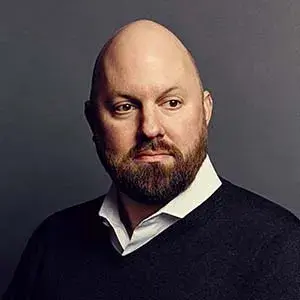
In October 2023, Marc Andreessen published a 5,200-word essay called 'The Techno-Optimist Manifesto.' It argued that technology is the only real source of human progress, that AI regulation is the work of a cult, that growth is good without qualification, and that the people trying to slow down Silicon Valley are the enemies of humanity.
The essay went viral. It was praised by people who benefit from the worldview it describes and criticized by nearly everyone who studies the actual effects of unregulated tech platforms on society. Andreessen responded to the criticism by posting more.
What the manifesto did not mention: Andreessen Horowitz, the venture capital firm he co-founded, has made massive investments in AI companies, crypto platforms, and defense tech startups. Every sector whose profitability is directly tied to the absence of regulation. The manifesto is not philosophy. It is the investment thesis.
Who he is
Andreessen grew up in Wisconsin and became famous at 22 for co-creating Mosaic, one of the first web browsers, while at the University of Illinois. He then co-founded Netscape in 1994, which was acquired by AOL for $4.2 billion in 1999. He sat on Hewlett-Packard's board. He co-founded the venture capital firm Andreessen Horowitz (a16z) in 2009 with Ben Horowitz, and it became one of Silicon Valley's most influential investment firms, with early backing of Facebook, Twitter, Airbnb, and later heavy investment in crypto and AI.
He sits on Meta's board of directors. He has for years. That matters when you understand the rest.
The political pivot that tells you everything
For most of his career, Andreessen was a Democrat-aligned donor. He described himself as moderate, voted for Obama, and was broadly considered part of the liberal end of Silicon Valley.
Then a few things happened in sequence. The Biden administration proposed a billionaire minimum income tax. The SEC began scrutinizing crypto platforms more aggressively, platforms in which a16z was deeply invested. Antitrust regulators started looking harder at tech acquisitions, which affected a16z portfolio companies. And the effective altruism movement, which a16z had publicly distanced itself from after Sam Bankman-Fried's fraud conviction, was gaining ground as the dominant ethos in AI development, complete with its emphasis on safety and regulation.
By 2024, Andreessen and Ben Horowitz had publicly backed Donald Trump, appeared at the Republican National Convention, and donated to the campaign. The New York Times reported that Biden's proposed billionaire minimum income tax was the specific trigger for Andreessen's political shift.
He didn't become a Republican because his values changed. He became one when his tax exposure did.
What the manifesto actually says and what it skips
The Techno-Optimist Manifesto opens with the line 'We are being lied to' and closes with a list of enemies, which includes safety advocates, risk managers, and people concerned about AI's impact on employment. It argues for infinite growth with zero qualification. It dismisses effective altruism as a cult. It invokes Nietzsche and Hayek as intellectual scaffolding.
What it doesn't engage with: that a16z backed Axie Infinity, a play-to-earn crypto game that operated as a pyramid scheme and seriously harmed thousands of people in the Philippines who bought the pitch. That a16z's investments in social media platforms produced documented harms to mental health, democracy, and public discourse. That the 'growth is good without qualification' argument looks different from the vantage point of someone whose job was automated, whose town was hollowed out by an algorithm, or whose retirement savings got vaporized by a crypto platform a16z promoted.
The manifesto is not a bad-faith document in the sense that Andreessen doesn't believe it. He probably does. But it is also a perfect cover story for a firm that profits from deregulation and needs the political environment to cooperate.
Why this matters for this audience
AI is eating white-collar jobs. It is accelerating. The question of whether that displacement comes with any social safety net, any retraining infrastructure, any policy cushion, or whether it just happens at maximum speed with maximum profit extraction and everyone else adjusts, is one of the defining questions of this decade.
Andreessen's answer is: it happens at maximum speed. Any attempt to slow it down, regulate it, or study its effects is pessimism, and pessimism is the enemy. The people losing their jobs are just not optimistic enough.
He sits on Meta's board while Meta's AI products are reshaping what people see and believe online. He has invested in AI tools that compete directly for the knowledge-work jobs millennials spent six figures in student loans to qualify for. He backed the administration that is now deregulating every part of the tech sector his firm is invested in.
The manifesto is optimistic about what happens to him. It's silent about what happens to you.
Stay Frustrated.

