Your Water Bill Is Going Up So Some Loser can Have an AI Girlfriend
The AI story mainstream media is pushing: brilliant engineers, breakthrough technology, the future arriving ahead of schedule.
Tools that write code, summarize documents, answer questions, generate images. Progress.
Here's the version they don't report on.
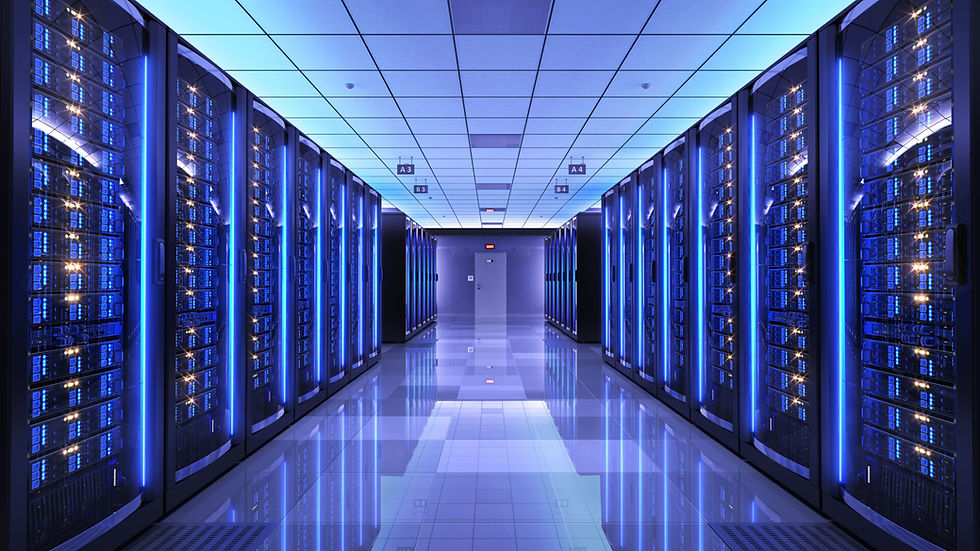
Somewhere in suburban Arizona, a facility the size of several football fields is evaporating millions of gallons of water into the desert sky every single day so that a server rack stays cool enough to tell someone their AI Girlfriend thinks they're cute.
The Water Problem Nobody Talks About
Data centers need to stay cold. The servers generate enormous heat, and if they overheat, they fail.
The dominant cooling method is evaporative cooling, essentially, giant industrial swamp coolers that pull water from local sources, run it through the system, and let a significant portion of it evaporate into the air. Gone. Not returned to the aquifer. Not recycled. Evaporated.
A single large hyperscale facility in a hot climate can use as much water per day as a city of 50,000 people.
Now look at where they build these things. Arizona. Nevada. Texas. The American Southwest, which is in the middle of a multi-decade megadrought, the worst in 1,200 years.
The Colorado River, which supplies water to 40 million people across seven states, has been shrinking for years. Lake Mead hit its lowest level in recorded history in 2022. Farmers in California and Arizona have had their water allocations cut. Towns have watched their wells go dry.
And in the middle of all of this, local governments have been approving data center after data center. Handing out permits to build facilities that will drain the local water table for decades all because the companies promised jobs and tax revenue.
Mesa, Arizona approved a Microsoft data center campus despite community opposition over water usage. The company initially refused to disclose how much water the facility would consume, calling it proprietary information. In a desert. During a drought.
When pushed, the companies point to efficiency improvements and pledges to be water positive by some future date.
Microsoft has promised to replenish more water than it uses by 2030. That's a nice goal. It doesn't help the farmer whose well ran dry in 2024. Who's going to hold them accountable.
The Electricity Shell Game
Water is the visible problem. The electricity story is more complicated and more expensive for you personally.
Data centers are the fastest-growing category of electricity consumption in the United States. The AI boom has accelerated this dramatically. Training a large language model like GPT-4 requires roughly the same amount of electricity as powering 1,000 American homes for a year.
And that's just training. Running it for inference (answering your questions) adds continuous ongoing demand.
Utilities had planned for flat or slowly growing demand. They were not ready for this. To serve data center customers, they now need to build new transmission lines, upgrade substations, expand generation capacity. That infrastructure costs money.
These costs don't get charged to the data center. It gets spread across all ratepayers, meaning every household and small business on the grid pays slightly more on their monthly bill to subsidize the infrastructure expansion that primarily benefits trillion-dollar tech companies.
At the same time, data centers negotiate special commercial electricity rates because they're high-volume customers.
A hyperscale data center might pay 3-4 cents per kilowatt-hour. The average American household pays 16 cents.
The economics of electricity mean that large industrial customers get steep discounts subsidized by the residential customers paying full price.
You are, in a very literal sense, subsidizing Amazon's server bills through your utility payment every month.
The Tax Break Racket
States compete aggressively to attract data centers because the companies have options. They can build anywhere with reasonable land, power, and connectivity.
So states offer incentives. Virginia, which hosts the largest concentration of data centers on earth (Northern Virginia handles an estimated 70% of the world's internet traffic), exempts data centers from sales tax on all equipment purchases.
This costs the state hundreds of millions of dollars per year in foregone revenue.
That's revenue that doesn't go to schools. Doesn't go to roads. Doesn't go to the water infrastructure that the data centers are straining.
It gets handed to companies like Amazon and Microsoft in the form of a tax exemption, and the gap gets filled by everyone else individual taxpayers, small businesses, municipalities cutting services.
Georgia, Texas, North Carolina, and dozens of other states run similar programs. The logic is that data centers bring jobs and economic activity.
The reality is that modern hyperscale data centers are highly automated a million-square-foot facility might employ a few hundred people, most of them in security and maintenance. The jobs argument is largely a fig leaf for a straight transfer of public resources to private companies.
The AI Multiplier
Everything described was already true before the current AI moment. ChatGPT, Gemini, Grok, Claude, Copilot and all of these products run on data centers, and the demand they've created has turned a slow-moving problem into an acute one.
Microsoft announced plans to invest $80 billion in data center infrastructure in 2025 alone. Amazon, Google, and Meta have announced comparable capital expenditure plans. The scale of buildout being planned is without precedent in the history of the technology industry.
The power demand alone is so significant that tech companies are now going back to nuclear. Microsoft signed a deal to restart Unit 1 of Three Mile Island to power its data centers.
Google has contracted for power from small modular nuclear reactors not yet built. They're not doing this for environmental reasons. They're doing it because they need reliable baseload power that the existing grid can't provide at the scale they require.
Meanwhile, the communities hosting all of this infrastructure are being asked to sacrifice water resources, accept rate increases, and give up tax revenue while being told they should feel grateful for the jobs and the future.
What Should Actually Happen
None of this requires tech companies to stop building data centers. It requires them to stop externalizing the costs onto the communities where they build.
Full water usage disclosure should be mandatory, not voluntary. Companies operating in drought-stressed watersheds should pay for the water they consume at a rate that reflects actual scarcity, not a subsidized municipal rate designed for households.
Rate design reforms should ensure that grid expansion costs are borne by the large customers driving the demand, not spread across residential ratepayers.
Tax incentives should be conditioned on actual, sustained employment commitments and verified community benefit not the promise of a handful of jobs that may or may not materialize.
None of this is radical. It's just making the accounting honest.
The companies building this infrastructure are worth, collectively, many trillions of dollars. The argument that they need the residents of drought-stricken Arizona to subsidize their water costs is not an economic argument. It's a power argument.
And so far, the power has been entirely on one side.

